
CPK & CPK-MB Test Explained: Normal Range, High Levels, Heart Attack, Muscle Damage & Report Meaning (India 2026) | सीपीके और सीपीके-एमबी टेस्ट गाइड
CPK & CPK-MB Test Explained: Normal Range, Heart Attack Marker & Muscle Damage — India 2026
CPK और CPK-MB टेस्ट: नॉर्मल रेंज, हार्ट अटैक और मांसपेशी क्षति — पूरी गाइड
Your lab report shows an elevated CPK or CPK-MB — and you are wondering what it means. CPK (also written CK — Creatine Phosphokinase or Creatine Kinase) is an enzyme found in muscle cells throughout the body. When muscle tissue is damaged — whether heart muscle, skeletal muscle, or rarely brain tissue — CPK leaks into the bloodstream and becomes elevated on a blood test. CPK-MB is the cardiac-specific fraction of CPK: an elevated CPK-MB (especially as a proportion of total CPK) strongly suggests the damaged muscle is the heart.
In Indian hospitals, CPK and CPK-MB are still widely ordered alongside or instead of Troponin for investigating chest pain, suspected heart attack, and muscle disease. This guide explains both tests — the isoenzyme fractions, normal ranges, how to read a rising CPK pattern, why CPK-MB is still clinically useful even though Troponin is more specific, and the many non-cardiac causes of CPK elevation. For a general introduction to reading lab reports, see our beginner's guide to blood test reports.
CPK (Creatine Phosphokinase) एक एंजाइम है जो मांसपेशियों की कोशिकाओं में पाया जाता है। जब मांसपेशियां क्षतिग्रस्त होती हैं — चाहे हृदय, कंकाल मांसपेशी, या मस्तिष्क — CPK खून में बढ़ जाता है। CPK-MB कार्डियक-विशिष्ट अंश है। Table of Contents / विषय सूची

What Is CPK? The Three Isoenzymes / CPK क्या है?
CPK (Creatine Phosphokinase) — also called CK (Creatine Kinase) — is an enzyme that plays a key role in energy production in muscle cells. It catalyses the conversion of creatine to phosphocreatine, providing rapid ATP energy for muscle contractions. When muscle cells are damaged or die, their membranes rupture and CPK leaks into the bloodstream, raising blood CPK levels.
CPK (Creatine Phosphokinase) — जिसे CK (Creatine Kinase) भी कहते हैं — एक एंजाइम है जो मांसपेशियों की कोशिकाओं में ऊर्जा उत्पादन में महत्वपूर्ण भूमिका निभाता है। जब मांसपेशियां क्षतिग्रस्त होती हैं, CPK रक्त में लीक होता है।CPK exists in three distinct isoenzymes — each found in different tissues. Understanding which isoenzyme is elevated tells doctors which tissue is damaged:
The dominant isoenzyme in total CPK. Comes almost entirely from skeletal (body) muscles. Elevated CPK-MM with a normal CPK-MB index = muscle damage, NOT heart damage. Common causes: vigorous exercise, IM injections, falls, myopathy, statin-induced myopathy, hypothyroidism, and rhabdomyolysis.
Normally makes up only 1–5% of total CPK in healthy individuals. Predominantly found in heart (cardiac) muscle. When heart muscle cells are damaged in a heart attack (MI), CPK-MB rises — both in absolute value AND as a proportion of total CPK (the CPK-MB Index). This is the key diagnostic marker for cardiac damage.
Found in brain and smooth muscle cells. Normally absent or undetectable in blood. Elevated CPK-BB is seen after severe brain injury, stroke, or cardiac arrest with prolonged hypoxia. Rarely reported in routine Indian lab panels — not part of standard cardiac or muscle workups. Specialist neurology context only.
Total CPK = CPK-MM + CPK-MB + CPK-BB. When only "CPK" is reported on your lab report without specifying the isoenzyme, this is the total value. A high total CPK alone tells you muscle is damaged somewhere — but NOT whether it is heart, skeletal muscle, or brain. The CPK-MB fraction must always be checked alongside.
Normal Range in India / भारत में सामान्य सीमा
*Reference ranges vary between labs and assay methods. Male CPK is higher than female CPK due to greater skeletal muscle mass. Vigorous exercise in the 48–72 hours before the test significantly elevates total CPK. Always check the reference range on your specific report.
*पुरुषों में CPK महिलाओं की तुलना में अधिक होता है। टेस्ट से 48–72 घंटे पहले जोरदार व्यायाम कुल CPK को काफी बढ़ा देता है।| Test / टेस्ट | Normal Range (Adult) | Unit | Clinical role |
|---|---|---|---|
| Total CPK (CK) पुरुष / Male |
39 – 308 | U/L | Total muscle enzyme. Elevated with any muscle damage — cardiac, skeletal, or brain. Must be interpreted with CPK-MB fraction to determine source. |
| Total CPK (CK) महिला / Female |
26 – 192 | U/L | |
| CPK-MB (absolute) | < 25 | U/L | Cardiac fraction of CPK. Elevated in heart muscle damage. Absolute value above 25 U/L is abnormal in most Indian labs. |
| CPK-MB Index CPK-MB ÷ Total CPK × 100 |
< 5 – 6% | % | The critical ratio. Above 5–6% with elevated total CPK strongly suggests cardiac origin. Below 5% suggests skeletal muscle source even if absolute CPK-MB is mildly elevated. |
CPK-MB & the CPK-MB Index — Reading Your Report

| Total CPK | CPK-MB absolute | CPK-MB Index | Interpretation |
|---|---|---|---|
| Normal | Normal | Normal | No muscle damage detected |
| High | High | > 6% | Likely cardiac damage (heart attack). CPK-MB rising as proportion of total CPK. Correlate with ECG and Troponin. |
| Very high (>5× normal) | Mildly elevated | < 5% | Skeletal muscle damage (rhabdomyolysis, myopathy, exercise, IM injection). NOT cardiac. Check kidney function — rhabdomyolysis can cause acute kidney injury. |
| High | High | Borderline 4–6% | Indeterminate. Serial testing required. Correlate with Troponin, ECG, and clinical symptoms. Some skeletal muscles (tongue, diaphragm) have higher CPK-MB content. |
| Normal / mildly high | Elevated | > 6% | Possible early MI or small infarct. Isolated elevated CPK-MB with normal total CPK can occur early in an MI before total CPK rises. Urgent Troponin required. |
CPK & CPK-MB Timeline After Heart Attack / समय-रेखा

Understanding the CPK timeline is essential for interpreting serial results and for understanding why a CPK test done too early after a heart attack may still be normal.
CPK की समय-रेखा को समझना सीरियल परिणामों की व्याख्या के लिए आवश्यक है।CPK-MB may not have risen yet if the patient arrives at hospital within the first 4 hours of symptom onset. A normal CPK-MB at arrival does NOT rule out a heart attack. Serial testing at 6 and 12 hours is required.
CPK-MB begins to rise within 4–8 hours of onset of infarction. At this point, the CPK-MB Index also begins to rise above 5–6%. This is the most useful diagnostic window for CPK-MB when Troponin is not available.
Both total CPK and CPK-MB peak between 12–24 hours. The peak height reflects the size of the infarct — larger heart attacks produce higher peaks. This is also the time when diagnosis is most straightforward from CPK alone.
CPK-MB returns to normal within 48–72 hours — much faster than Troponin (which stays elevated for 7–14 days). This rapid clearance is clinically useful: a patient who had a heart attack 3 days ago will have normal CPK-MB but still-elevated Troponin. CPK-MB is also used to detect re-infarction: if CPK-MB drops after an MI and then rises again, it signals a second event.
CPK-MB vs Troponin — Why Both Are Still Used in India
Modern cardiology guidelines recommend High-Sensitivity Troponin (hs-Troponin) as the gold standard cardiac marker — it is more sensitive and more specific than CPK-MB for detecting heart muscle damage. So why is CPK-MB still widely ordered in Indian hospitals?
आधुनिक दिशानिर्देश hs-Troponin को स्वर्ण मानक के रूप में अनुशंसित करते हैं। तो भारतीय अस्पतालों में CPK-MB अभी भी व्यापक रूप से क्यों मंगाया जाता है?| Feature / विशेषता | CPK-MB | High-Sensitivity Troponin (hs-TnI) |
|---|---|---|
| Rises after MI | 4–8 hours | 1–3 hours (faster) |
| Peaks | 12–24 hours | 12–24 hours |
| Returns to normal | 48–72 hours | 7–14 days |
| Sensitivity for MI | Moderate | Very high (gold standard) |
| Cardiac specificity | Moderate — can be elevated by skeletal muscle | High — cardiac-specific protein |
| Re-infarction detection | Excellent (normalises quickly) | Poor (stays elevated for weeks) |
| Cost in India | Lower — widely available | Higher — available in major hospitals |
| Muscle disease diagnosis | Useful (total CPK) | Not useful |
Non-Cardiac Causes of High CPK in India
A high total CPK does not mean a heart attack. The majority of elevated CPK results in India are from non-cardiac causes. Recognising these common scenarios prevents unnecessary alarm and over-investigation.
उच्च कुल CPK का मतलब हार्ट अटैक नहीं है। भारत में अधिकांश बढ़े हुए CPK परिणाम गैर-हृदय कारणों से होते हैं।The most common cause of mildly-to-moderately elevated CPK in India. Heavy manual work, intense gym workouts, marathon running, or even a long cricket or football game the day before can raise CPK 3–10× normal. This is entirely benign — the CPK-MB Index will be below 5% and Troponin will be normal. Always ask about recent physical activity before investigating further.
A particularly common cause in India — where IM injections (diclofenac, vitamins, analgesics) are frequently given in primary care clinics. IM injections cause localised skeletal muscle damage and can raise total CPK 2–5× normal. A patient admitted to hospital with chest pain who also received IM injections in a nearby clinic before arriving may have an elevated CPK from the injection alone — making CPK-MB Index calculation and Troponin essential for cardiac assessment.
One of the most under-recognised causes of persistently elevated CPK in India. Hypothyroidism causes a true myopathy (muscle disease) — patients develop proximal muscle weakness, aches, and significantly elevated CPK (sometimes 5–10× normal). Any patient with persistently elevated CPK and unexplained muscle symptoms should have TSH checked — treating the hypothyroidism normalises CPK.
Statins (atorvastatin, rosuvastatin — widely prescribed in India for heart disease prevention) can cause muscle damage ranging from mild myalgia (muscle aches with mildly elevated CPK) to severe rhabdomyolysis (CPK >10× normal with kidney damage). Any patient on statins with muscle pain or weakness should have CPK checked. If CPK exceeds 5–10× normal, the statin must be stopped urgently and kidney function assessed.
Massive skeletal muscle breakdown — CPK may exceed 100× normal (above 10,000–100,000 U/L). Causes in India: severe dehydration, crush injuries, drug toxicity (statins, alcohol), seizures, heat stroke, and severe infections. Rhabdomyolysis is a medical emergency because myoglobin released from muscle can block kidney tubules causing acute kidney injury. Check serum creatinine and urine output immediately.
Duchenne and Becker muscular dystrophy — common inherited muscle diseases in India — cause persistently and dramatically elevated CPK (often 50–100× normal) from childhood. CPK is the primary screening and monitoring test for these conditions. Inflammatory myopathies (polymyositis, dermatomyositis) also cause elevated CPK with proximal muscle weakness. In these conditions, the CPK-MB may be slightly elevated but the CPK-MB Index remains below 5%.
✅ Book CPK / Cardiac Enzyme Tests — Home Collection Available
For post-discharge monitoring after a cardiac event, or for investigating unexplained muscle pain and elevated CPK, these panels are available with home collection:
Affiliate links: I may earn a small commission at no extra cost to you. Prices as of April 2026. Home collection available in most Indian cities. Note: if you are experiencing active chest pain, go to a hospital ER — do not book a home collection.
CPK, CPK-MB, ट्रोपोनिन और कार्डियक जोखिम पैकेल — घर से सैंपल कलेक्शन उपलब्ध है। सक्रिय सीने के दर्द में: अस्पताल ER जाएं। Cardiac Support Supplement — CoQ10 for Heart Health
CoQ10 (Coenzyme Q10) is a naturally occurring antioxidant in heart muscle cells that plays a key role in cellular energy production. Statins — widely prescribed in India for cholesterol — are known to deplete CoQ10 levels. Some cardiologists recommend CoQ10 supplementation for patients on statins who experience muscle pain or weakness (elevated CPK).
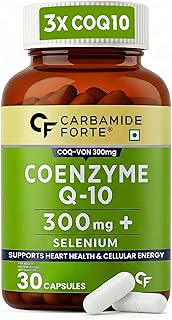
Carbamide Forte CoQ10 300mg with Selenium
High-dose CoQ10 with selenium for antioxidant support. Always consult your cardiologist or doctor before starting any supplement, especially if you are on statins, blood thinners, or cardiac medications — interactions are possible. Supplements are not a substitute for prescribed cardiac medication.
View on Amazon IndiaDisclosure: Affiliate link. We may earn a small commission at no extra cost to you.
Related Tests / संबंधित जांचें
These tests are commonly ordered alongside CPK and CPK-MB:
CPK और CPK-MB के साथ ये जांचें अक्सर करवाई जाती हैं:Frequently Asked Questions / अक्सर पूछे जाने वाले सवाल
CPK (total Creatine Phosphokinase) is the overall muscle enzyme found in all types of muscle — heart, skeletal, and brain. An elevated total CPK tells you that some muscle is damaged, but not which muscle. CPK-MB is the cardiac-specific fraction of CPK — it is predominantly found in heart muscle cells. An elevated CPK-MB (especially as a proportion of total CPK, called the CPK-MB Index) specifically suggests that the damaged tissue is the heart. Always calculate the CPK-MB Index (CPK-MB ÷ Total CPK × 100): above 5–6% points to cardiac origin; below 5% suggests skeletal muscle even if absolute CPK-MB is mildly elevated.
उत्तर: CPK कुल मांसपेशी एंजाइम है — हृदय, कंकाल और मस्तिष्क सभी से। CPK-MB कार्डियक-विशिष्ट अंश है। CPK-MB इंडेक्स (5–6% से ऊपर = कार्डियक, नीचे = कंकाल मांसपेशी) महत्वपूर्ण है।Not necessarily — in fact, the majority of very high total CPK results in India are not from heart attacks. The most common causes of significantly elevated total CPK are vigorous exercise or manual labour in the previous 48 hours, IM injections, statin-induced myopathy, hypothyroidism, and rhabdomyolysis from dehydration or injury. To determine whether elevated CPK is cardiac in origin, the CPK-MB Index must be above 5–6% AND ideally confirmed with a Troponin test. A very high total CPK (>10× normal) with a low CPK-MB Index (<5%) almost always means skeletal muscle damage — not a heart attack.
उत्तर: जरूरी नहीं — व्यायाम, IM इंजेक्शन, स्टैटिन मायोपैथी, हाइपोथायरायडिज्म सभी CPK बढ़ाते हैं। CPK-MB इंडेक्स >5–6% और ट्रोपोनिन — दोनों जांचें।Troponin (especially High-Sensitivity Troponin) is more sensitive and more specific for heart muscle damage and is the gold standard in major hospitals. However, CPK-MB remains clinically useful in India for three main reasons: it is significantly cheaper and more widely available in tier-2 and tier-3 cities; it normalises within 48–72 hours (versus 7–14 days for Troponin), making it the only reliable marker for re-infarction — a second heart attack shortly after the first would cause a fresh rise of CPK-MB even while Troponin remains elevated from the first event; and total CPK (without MB fraction) is essential for diagnosing and monitoring skeletal muscle diseases where Troponin has no role.
उत्तर: CPK-MB अभी भी क्यों उपयोगी है: (1) कम लागत, (2) पुनः रोधगलन का पता लगाना (48–72 घंटों में सामान्य), (3) मांसपेशी रोग निदान जहां ट्रोपोनिन अप्रासंगिक है।Yes — statin-induced myopathy is one of the most common causes of unexplained CPK elevation in Indian outpatients. Statins (atorvastatin, rosuvastatin, simvastatin) can cause a spectrum of muscle problems: mild myalgia (muscle aches with mildly elevated CPK), more significant myopathy (CPK 5–10× normal with weakness), and rarely rhabdomyolysis (CPK >10× normal with risk of acute kidney injury). The risk is higher with higher statin doses, in patients with hypothyroidism (which independently raises CPK), and with drug interactions (particularly with certain antibiotics and antifungals). Any patient on statins who develops unexplained muscle pain or weakness should have CPK checked. If CPK exceeds 5× normal, consult your doctor about stopping or dose-reducing the statin.
उत्तर: हां — स्टैटिन मायोपैथी भारतीय आउटपेशेंट में अस्पष्ट CPK वृद्धि के सबसे सामान्य कारणों में से एक है। यदि CPK 5× सामान्य से अधिक हो तो डॉक्टर से परामर्श करें।No — fasting is not required for CPK or CPK-MB. Both are enzyme tests not affected by food intake. However, there are two important preparations: avoid vigorous exercise or heavy physical labour for at least 48–72 hours before the test, as this raises total CPK significantly from skeletal muscle (which can confuse interpretation). Also avoid any IM injections in the 48 hours before the test — even a single IM injection in the gluteal muscle can raise CPK 2–5× normal. If either of these activities occurred before the test, inform your doctor so the result is interpreted correctly.
उत्तर: नहीं — CPK/CPK-MB के लिए उपवास आवश्यक नहीं। लेकिन टेस्ट से 48–72 घंटे पहले जोरदार व्यायाम और IM इंजेक्शन से बचें — दोनों कुल CPK बढ़ाते हैं।Rhabdomyolysis is a serious condition of massive skeletal muscle breakdown causing CPK to rise 10–100× above normal (often above 10,000 U/L). The muscle protein myoglobin released during rhabdomyolysis is toxic to kidney tubules and can cause acute kidney injury. Indian causes include: severe dehydration, heat stroke (common in Indian summers), crush injuries, prolonged seizures, severe infections with sepsis, high-dose or interacting statin use, and extreme exertion. Warning signs: tea-coloured or dark urine (myoglobinuria), severe muscle pain, and swelling. If rhabdomyolysis is suspected, check serum creatinine, urine output, and urine myoglobin alongside CPK. Urgent hospital admission and IV fluids are required.
उत्तर: रबडोमायोलिसिस = मांसपेशियों का बड़े पैमाने पर टूटना (CPK 10–100× से अधिक)। चाय के रंग का मूत्र, तेज मांसपेशियों में दर्द — तुरंत अस्पताल जाएं। किडनी क्रिएटिनिन तुरंत जांचें।- MedlinePlus (NIH): Creatine Kinase (CK) Test — Patient Information
- MedlinePlus (NIH): CK-MB Test — Patient Information
- American Heart Association: Diagnosing a Heart Attack
⚠️ Medical Disclaimer / चिकित्सा अस्वीकरण
This article is for educational purposes only. CPK and CPK-MB results must always be interpreted by a qualified cardiologist or physician alongside ECG findings, Troponin, and clinical symptoms. Never self-diagnose chest pain or muscle disease based on this guide. If you experience chest pain, breathlessness, or severe muscle pain — seek emergency care immediately.
यह लेख केवल शैक्षिक उद्देश्यों के लिए है। CPK और CPK-MB परिणाम हमेशा एक योग्य चिकित्सक द्वारा ECG और ट्रोपोनिन के साथ व्याख्या किए जाने चाहिए।


Comments
Post a Comment