
Chikungunya IgM Test Explained: Positive Result Meaning, Report Reading & Joint Pain (India 2026) | चिकनगुनिया IgM टेस्ट गाइड
Chikungunya IgM Test Explained: Positive Result, Report Reading & Persistent Joint Pain (India 2026)
चिकनगुनिया IgM टेस्ट: पॉजिटिव रिजल्ट का मतलब, रिपोर्ट कैसे पढ़ें, जोड़ों का दर्द — पूरी गाइड
High fever, severe joint pain in both wrists and ankles, and a rash after a mosquito bite during the monsoon — and your doctor has ordered a Chikungunya IgM test. Chikungunya is one of the three major mosquito-borne fevers in India's monsoon season (alongside dengue and malaria), and is notorious for causing debilitating joint pain that can last weeks to months — even after the fever resolves. Understanding your Chikungunya IgM test result, what positive means, and why joint pain persists is critical for appropriate treatment and realistic expectations.
This guide explains the Chikungunya IgM test in simple English and Hindi — what it measures, when to test, what a positive result means, and how Chikungunya differs from dengue and other arthritis conditions. For reading lab reports generally, see our beginner's guide to blood test reports.
चिकनगुनिया IgM टेस्ट भारत के मानसून सीजन में मच्छर जनित तीन प्रमुख बुखारों में से एक — चिकनगुनिया — के लिए निदान परीक्षण है। यह बुखार जोड़ों के गंभीर दर्द के लिए कुख्यात है जो हफ्तों से महीनों तक रह सकता है। Table of Contents / विषय सूची

What Is Chikungunya? / चिकनगुनिया क्या है?
Chikungunya is a viral disease caused by the Chikungunya virus (CHIKV) — an RNA alphavirus of the family Togaviridae. The name comes from the Makonde language of Tanzania and Mozambique, meaning "to walk bent over" — a description of the stooped posture caused by severe joint pain. The virus is transmitted exclusively by Aedes aegypti and Aedes albopictus mosquitoes — the same daytime-biting mosquitoes responsible for dengue. India has experienced multiple large chikungunya outbreaks since 2006, with the worst affecting millions of people across Maharashtra, Karnataka, Andhra Pradesh, Tamil Nadu, and Delhi NCR.
चिकनगुनिया Chikungunya virus (CHIKV) के कारण होने वाली वायरल बीमारी है। नाम का अर्थ "झुककर चलना" है — जो गंभीर जोड़ों के दर्द के कारण होने वाली झुकी हुई मुद्रा का वर्णन करता है। वायरस Aedes aegypti और Aedes albopictus मच्छरों द्वारा प्रसारित होता है।The IgM Test — What It Measures & When to Test

The Chikungunya IgM test detects IgM (Immunoglobulin M) antibodies in blood — the first class of antibodies the immune system produces in response to a new infection. Understanding when to test and what each antibody means is critical for accurate interpretation:
चिकनगुनिया IgM टेस्ट रक्त में IgM एंटीबॉडी का पता लगाता है — एंटीबॉडी का पहला वर्ग जो प्रतिरक्षा प्रणाली नए संक्रमण के जवाब में बनाती है।IgM is the "first responder" antibody — produced within 4–8 days of CHIKV infection, peaking at 2–3 weeks, and gradually declining over 3–6 months. A positive IgM = recent or current Chikungunya infection. IgM can persist for up to 6 months after recovery — meaning a positive IgM alone does not confirm active current disease if the patient had Chikungunya 3–4 months ago. In a patient with current fever and joint pain in monsoon season, a positive IgM strongly confirms active Chikungunya.
IgG antibodies appear 10–14 days after infection, rise more slowly than IgM, and persist lifelong — providing long-term immunity. A positive IgG alone means the person was infected with Chikungunya in the past (months to years ago) — not necessarily a current infection. IgG positive + IgM negative = past infection, recovered immunity, not currently ill from Chikungunya. IgG positive + IgM positive = recent infection (within past few weeks to months). Once infected, re-infection with Chikungunya is rare due to lifelong IgG immunity.
Testing before Day 4–5 of fever onset will almost certainly give a false negative IgM — because IgM antibodies have not had time to accumulate to detectable levels. This is the most common reason for "IgM negative but still looks like Chikungunya." If tested before Day 5 and the result is negative, but clinical suspicion remains high (bilateral joint pain + fever + rash in monsoon season + Aedes exposure), the test should be repeated on Day 7–10. The optimal testing window for Chikungunya IgM is Day 5–21 after symptom onset.
In the first 1–5 days of illness (before IgM is detectable), Chikungunya can be diagnosed by detecting the virus itself. Chikungunya NS1 antigen rapid test (similar to dengue NS1) is available at some Indian labs and detects viral antigen in the first 5 days. RT-PCR for CHIKV RNA is the most sensitive early test (Day 1–8) — available at reference labs, ICMR centres, and large private laboratories. After Day 5–7, IgM becomes the preferred and more accessible test. For most Indian patients presenting after Day 5 of fever, the standard Chikungunya IgM ELISA is sufficient.
Reading Your Report — Positive vs Negative
| Result / परिणाम | IgM | IgG | Interpretation / व्याख्या | Clinical action |
|---|---|---|---|---|
| Negative / Negative | Non-reactive | Non-reactive | No current or past Chikungunya. If tested before Day 5 of fever — repeat after Day 7. If tested after Day 7 — Chikungunya unlikely. | Test for dengue NS1/IgM, malaria antigen, and CBC. Consider other causes of fever and joint pain. |
| Positive / Negative | Reactive ✓ | Non-reactive | Recent/early Chikungunya infection — IgM present but IgG not yet developed. Classic acute presentation in first 1–2 weeks of illness. | Confirm Chikungunya diagnosis. Supportive treatment (paracetamol, fluids, rest). Avoid NSAIDs in first week. Repeat CBC for platelet monitoring. |
| Positive / Positive | Reactive ✓ | Reactive ✓ | Recent Chikungunya (1–6 months ago) with evolving immune response — OR current acute infection with early IgG rise. Most common pattern seen in Indian labs. | Correlate with symptom onset date. If fever started <3 weeks ago = active current infection. If fever was months ago = recent past infection, ongoing joint pain = post-Chikungunya arthritis. |
| Negative / Positive | Non-reactive | Reactive ✓ | Past Chikungunya infection (months to years ago) — immune and recovered. IgG alone does NOT confirm current Chikungunya illness. | Patient is immune to Chikungunya. Current symptoms are from a different cause — investigate dengue, malaria, viral arthritis, or rheumatoid arthritis. |
Chikungunya vs Dengue vs Malaria — The Monsoon Differential

| Feature / विशेषता | Chikungunya | Dengue | Malaria (Pf/Pv) |
|---|---|---|---|
| Mosquito vector | Aedes aegypti / albopictus (daytime) | Aedes aegypti / albopictus (daytime) | Anopheles (night) |
| Fever pattern | Sudden high, breaks by Day 7–10 | Sudden high with "saddle" pattern; continuous | Cyclical (48h or 72h) with rigors, chills, sweating |
| Signature symptom | Severe bilateral joint pain (wrists, ankles, knees) | Retro-orbital pain, severe headache, bleeding tendency | Rigors (shaking chills), splenomegaly |
| Rash | Maculopapular rash in 70–80%, Day 2–5 | Petechial rash, Day 3–5 (dengue rash) | Rare / none |
| Platelet count (CBC) | Mildly reduced (100,000–150,000 common) | Severely low — often below 50,000; crash is danger sign | Moderately low; rises with treatment |
| Joint pain | Hallmark — severe, persistent weeks to months | Myalgia (muscle pain); joint pain less prominent | Body aches; joint pain not prominent |
| Mortality risk | Very rare — not life-threatening in most | High if severe dengue / DSS — life-threatening | High for P. falciparum — cerebral malaria |
| Diagnostic test | Chikungunya IgM (after Day 5) | Dengue NS1 (Day 1–5) + IgM (after Day 5) | Malaria antigen RDT + blood smear |
| Specific treatment | No antiviral — supportive only | No antiviral — supportive; platelet monitoring critical | ACT (Pf) or Chloroquine + Primaquine (Pv) |
Persistent Joint Pain After Chikungunya
The most clinically important and distressing aspect of Chikungunya in India is post-Chikungunya arthritis — joint pain that persists long after the acute fever resolves. This affects up to 40% of patients and is the reason many Indians visit orthopaedic surgeons, rheumatologists, and physiotherapists weeks to months after the initial infection.
चिकनगुनिया के बाद सबसे महत्वपूर्ण और कष्टकर पहलू पोस्ट-चिकनगुनिया आर्थराइटिस है — तीव्र बुखार ठीक होने के बाद भी जोड़ों का दर्द जारी रहना। यह 40% तक रोगियों को प्रभावित करता है।Chikungunya virus has a specific tropism (affinity) for synovial cells — the cells lining joint cavities. The virus can persist in joint tissues even after it has been cleared from the blood. This ongoing viral presence or the immune response to viral remnants drives chronic synovial inflammation (synovitis) — causing the classic post-Chikungunya arthritis. Histologically, it resembles the early stages of rheumatoid arthritis — with synovial hyperplasia, lymphocyte infiltration, and inflammatory cytokine production (IL-6, TNF-alpha, IL-1). Unlike true rheumatoid arthritis, post-Chikungunya arthritis is self-limiting — it resolves in most patients within 12–18 months, though 5–10% develop truly chronic arthritis resembling seropositive RA.
Post-Chikungunya arthritis characteristically affects the same joints as the acute phase: small joints of hands and feet (interphalangeal joints, metacarpophalangeal joints), wrists, ankles, and knees — bilateral and symmetrical. Morning stiffness lasting more than 30 minutes is common — identical to rheumatoid arthritis. The pain is typically worse in the mornings and after rest, improving with movement. Duration varies: Most patients: 3–6 months. Moderate proportion: 6–12 months. Small proportion (5–10%): beyond 12 months — may represent true Chikungunya-triggered RA in genetically susceptible individuals (HLA-B27, HLA-DRB1 associations studied).
Differentiating post-Chikungunya arthritis from true Rheumatoid Arthritis is a common clinical challenge in India. Key distinguishing features: History — clear acute febrile illness with rash and bilateral joint pain during monsoon season. RA Factor and Anti-CCP are negative in post-Chikungunya arthritis (may be weakly positive transiently but not persistently elevated). X-rays: no erosions in post-Chikungunya arthritis (unlike RA which causes bone erosion). ESR and CRP: elevated in both. Chikungunya IgM or IgG: positive (past infection evidence). Resolution of pain within 12–18 months: favours post-Chikungunya. Persistent RA-pattern with positive Anti-CCP: true RA triggered by Chikungunya in susceptible individuals.
No antiviral drug is effective. Pain management: NSAIDs (ibuprofen, naproxen, diclofenac) — first-line for post-Chikungunya arthritis after the first week; avoid in the first week of acute illness (may worsen bleeding tendency in concurrent dengue). Hydroxychloroquine (200–400 mg/day) — widely used in India for post-Chikungunya arthritis; reduces inflammation and joint damage; takes 4–6 weeks to show effect — the standard recommendation from Indian rheumatologists for persistent post-Chikungunya arthritis. Short-course oral corticosteroids (prednisolone) for severe flares. Physiotherapy: gentle range-of-motion exercises, warm water therapy, physiotherapy to maintain joint function. DMARDs (methotrexate): only if persistent RA-pattern confirmed after 12 months with positive Anti-CCP.
Treatment & Management in India
Rest and adequate hydration. Paracetamol (acetaminophen) — first-line fever and pain management; maximum 4 doses of 500–1000 mg per day in adults. Do NOT use aspirin (risk of Reye's syndrome in children; bleeding risk). Avoid NSAIDs in the first week (ibuprofen, diclofenac) — in case co-existing dengue is undiagnosed (NSAIDs worsen dengue haemorrhage risk). CBC monitoring: daily platelet count during acute phase to ensure no severe thrombocytopenia. If platelets fall below 50,000/µL or bleeding signs appear — hospitalisation and reassess for dengue co-infection. Monitor fluid intake — dehydration from high fever worsens joint pain.
Once dengue has been excluded (NS1 and dengue IgM negative, platelets stable), NSAIDs can be used for joint pain: ibuprofen 400 mg three times daily with food, or naproxen 500 mg twice daily. Take NSAIDs with food to reduce gastric side effects. If joint pain persists beyond 4 weeks — rheumatology consultation. Hydroxychloroquine (Plaquenil, HCQ) 200–400 mg daily: standard Indian rheumatology recommendation for post-Chikungunya arthritis persisting beyond 4 weeks; requires 4–6 weeks to take effect; continue for 6–12 months in most cases; regular eye check every 6 months. Physiotherapy programme for affected joints. Monitor ESR and CRP to track inflammation resolution.
Seek immediate medical attention if: platelet count falls below 50,000/µL on CBC; any spontaneous bleeding (gum bleeding, nose bleed, blood in urine, petechiae — red dots under skin); severe abdominal pain (may indicate dengue plasma leakage); difficulty breathing; altered consciousness or confusion; inability to keep fluids down due to vomiting (risk of dehydration); fever persisting beyond 10 days without improvement (may indicate secondary bacterial infection); severe joint swelling with warmth and redness affecting one joint asymmetrically (may indicate septic arthritis requiring urgent drainage).
No vaccine for Chikungunya is currently available in India. Prevention depends entirely on avoiding Aedes mosquito bites. Aedes mosquitoes breed in small collections of clean stagnant water: empty or cover water coolers, flower pots, tyres, buckets, unused containers. Use mosquito repellents containing DEET or picaridin on exposed skin during daytime (Aedes bites from sunrise to sunset — not only dusk-to-dawn like malaria). Wear full-sleeve clothing during peak bite hours (morning and late afternoon). Window and door screens. Insecticide-treated clothing.
✅ Book Chikungunya IgM Test or Fever Panel — Home Collection Available
During monsoon season, chikungunya should always be tested alongside dengue and malaria — they share the same mosquito vector and can coexist. Book individually or as part of a fever panel:
Affiliate links: I may earn a small commission at no extra cost to you. Government hospitals and PHCs offer Chikungunya testing free under NVBDCP. If fever is very high with joint pain and platelet count is dropping rapidly — go directly to a hospital rather than waiting for home collection results.
मानसून में चिकनगुनिया, डेंगू और मलेरिया एक साथ जांचें — सभी एक ही मच्छर से फैलते हैं। सरकारी PHC में NVBDCP के तहत निःशुल्क परीक्षण उपलब्ध है। Mosquito Repellent — Prevention Is the Only Cure for Chikungunya
Since no vaccine or specific antiviral treatment exists for Chikungunya, the only way to prevent it is avoiding Aedes mosquito bites. Aedes mosquitoes are daytime biters — peak activity from sunrise to sunset. An effective mosquito repellent applied to exposed skin during the monsoon season (July–November) significantly reduces bite risk. Natural repellents containing citronella are suitable for children and adults who prefer chemical-free options.
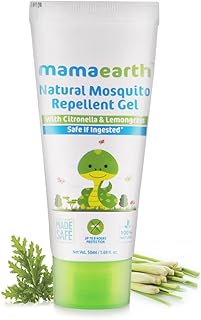
Mamaearth Natural Mosquito Repellent Gel — 50 ml, with Citronella & Natural Actives
Natural mosquito repellent gel formulated with citronella and other natural actives — provides protection against daytime Aedes mosquito bites that transmit Chikungunya and dengue. Suitable for all ages including children. DEET-free formula — ideal for daily use during the monsoon season. Apply to exposed skin on arms, legs, and neck during peak Aedes activity hours (morning and afternoon). Reapply every 2–3 hours for continuous protection.
View on Amazon IndiaDisclosure: Affiliate link. We may earn a small commission at no extra cost to you.
Related Tests / संबंधित जांचें
These tests are commonly ordered alongside Chikungunya IgM in India:
चिकनगुनिया IgM के साथ ये जांचें अक्सर करवाई जाती हैं:Frequently Asked Questions / अक्सर पूछे जाने वाले सवाल
A positive Chikungunya IgM strongly suggests a current or recent Chikungunya infection — but context matters. IgM antibodies appear 4–8 days after infection and can persist for 3–6 months after full recovery. If your fever started within the last 3 weeks and you have characteristic symptoms (sudden high fever, severe bilateral joint pain especially in wrists and ankles, skin rash) during monsoon season — a positive IgM strongly confirms active current Chikungunya. If your fever was months ago and you are now testing for persistent joint pain — the positive IgM may be residual from the old infection, confirming post-Chikungunya arthritis rather than a new active infection. Always tell your doctor the exact date your fever started when interpreting a Chikungunya IgM result.
उत्तर: पॉजिटिव IgM वर्तमान या हालिया चिकनगुनिया का सुझाव देता है। IgM 3–6 महीने तक रह सकता है। अगर बुखार 3 हफ्ते के भीतर था = सक्रिय संक्रमण। अगर बुखार महीनों पहले था = पुराने संक्रमण का अवशिष्ट IgM। डॉक्टर को बुखार शुरू होने की सटीक तारीख बताएं।Yes — this is extremely common and is one of the most characteristic features of Chikungunya. Post-Chikungunya arthritis (joint pain persisting after fever resolution) affects up to 40% of patients in India, and is the reason Chikungunya is so debilitating compared to dengue. The joint pain typically affects the same joints as the acute phase (wrists, ankles, knees, fingers — bilaterally and symmetrically) and may be accompanied by morning stiffness lasting 30 minutes to several hours — very similar to rheumatoid arthritis. For most patients, the pain gradually improves over 3–6 months. A minority continue for 6–12 months. About 5–10% develop truly chronic arthritis beyond 12 months. Treatment: NSAIDs (after dengue has been excluded), hydroxychloroquine for persistent cases, physiotherapy. Reassurance is important — this is not a permanent crippling disease in the vast majority of patients, though it is genuinely painful and disabling temporarily. Consult a rheumatologist if joint pain persists beyond 4–6 weeks.
उत्तर: हां — यह बहुत आम है। 40% तक भारतीय रोगियों में पोस्ट-चिकनगुनिया आर्थराइटिस होता है। 3–6 महीने में अधिकांश ठीक होते हैं। NSAIDs और hydroxychloroquine से उपचार। अधिकांश रोगियों के लिए यह स्थायी अपंगता नहीं है।No — fasting is absolutely not required before the Chikungunya IgM test. The test detects antibodies in blood serum — antibody levels are not affected by food intake, time of day, or fasting. You can eat and drink normally before providing the blood sample. No special preparation is needed. The only timing consideration is disease-related, not diet-related: the Chikungunya IgM test should be done at least 4–5 days after fever onset for reliable results — testing too early (before Day 4–5) gives a false negative because IgM antibodies have not yet accumulated to detectable levels. If the Chikungunya IgM is being ordered alongside other tests that require fasting (such as fasting blood sugar or lipid profile in a broader health panel), follow the fasting instructions for those specific tests only.
उत्तर: नहीं — चिकनगुनिया IgM के लिए उपवास आवश्यक नहीं। एंटीबॉडी भोजन से प्रभावित नहीं होते। एकमात्र समय नियम: बुखार शुरू होने के 4–5 दिन बाद टेस्ट करें।Yes — co-infection with both Chikungunya and dengue is absolutely possible, because both are transmitted by the same Aedes mosquitoes. If the same mosquito is carrying both viruses, a single bite can potentially transmit both. Co-infection has been documented in multiple Indian outbreak studies, including during major epidemics in Maharashtra, Karnataka, and Tamil Nadu. The clinical presentation of co-infection is more severe than either infection alone — with features of both: severe joint pain (Chikungunya) combined with significant platelet drop and bleeding tendency (dengue). This is why in monsoon fever panels, both tests are done simultaneously — Chikungunya IgM AND dengue NS1/IgM — and why NSAIDs should be avoided in the first week until dengue has been excluded. Co-infection also makes platelet management more critical — the Chikungunya-associated platelet drop can overlap with dengue's more severe thrombocytopenia.
उत्तर: हां — चिकनगुनिया और डेंगू का एक साथ संक्रमण संभव है — दोनों एक ही Aedes मच्छर से फैलते हैं। भारतीय महामारी अध्ययनों में यह प्रलेखित है। इसीलिए मानसून बुखार पैनल में दोनों एक साथ जांचे जाते हैं।Yes — post-Chikungunya arthritis can closely mimic Rheumatoid Arthritis (RA) in its clinical features: symmetrical small joint involvement (wrists, fingers, ankles), morning stiffness, and elevated ESR/CRP. However, the distinction is important because treatments differ. Post-Chikungunya arthritis: history of acute febrile illness with rash during monsoon season, positive Chikungunya IgM or IgG, RA Factor and Anti-CCP antibodies are negative (or only transiently weakly positive), X-rays show no joint erosions, and the condition typically resolves within 12–18 months. True RA triggered by Chikungunya: a small proportion (~5–10%) of patients with post-Chikungunya joint disease develop genuinely persistent RA — with persistently positive Anti-CCP, progressive joint damage on X-ray, and no spontaneous resolution. This is thought to occur in genetically susceptible individuals (specific HLA subtypes) in whom the Chikungunya viral arthritis triggers a permanent autoimmune joint disease. If your joint pain persists beyond 12 months and Anti-CCP is persistently elevated — your doctor is correct to manage it as RA. Hydroxychloroquine is effective for both conditions.
उत्तर: हां — पोस्ट-चिकनगुनिया आर्थराइटिस RA की नकल करता है। अंतर: पोस्ट-चिकनगुनिया में Anti-CCP नेगेटिव, X-ray में कोई इरोजन नहीं, 12–18 महीनों में ठीक। 5–10% में Anti-CCP पॉजिटिव के साथ सच्चा RA विकसित — इनमें DMARD उपचार आवश्यक।As of 2026, no Chikungunya vaccine is available in India for routine use. Globally, the US FDA approved the first Chikungunya vaccine (Ixchiq, developed by Valneva) in November 2023 — a live-attenuated single-dose vaccine for adults aged 18 and above. However, it has not yet received approval from India's CDSCO (Central Drugs Standard Control Organisation) for use in India and is not available through Indian healthcare facilities. Several other Chikungunya vaccine candidates are in clinical trials globally and in India (CBER-CMC vaccine, mRNA-based vaccines), and may become available within the next few years. For now, prevention in India relies entirely on individual and community-level mosquito control — eliminating Aedes breeding sites, personal protective measures (repellents, long-sleeved clothing, window screens), and public health vector control programmes. Given the lack of a vaccine and effective antiviral treatment, preventing Aedes mosquito bites during monsoon season remains the only effective protection.
उत्तर: 2026 तक भारत में कोई चिकनगुनिया वैक्सीन उपलब्ध नहीं है। अमेरिकी FDA ने 2023 में Ixchiq वैक्सीन को मंजूरी दी — लेकिन CDSCO ने भारत के लिए अभी मंजूरी नहीं दी। रोकथाम: Aedes प्रजनन स्थल हटाना + मच्छर प्रतिरोधी + पूरी आस्तीन के कपड़े।- WHO — Chikungunya: WHO Chikungunya Fact Sheet
- NVBDCP (Govt of India): National Vector Borne Disease Control Programme
- MedlinePlus: Chikungunya — Patient Information
⚠️ Medical Disclaimer / चिकित्सा अस्वीकरण
This article is for educational purposes only. Chikungunya IgM results must be interpreted by a qualified physician alongside clinical symptoms, CBC, and dengue testing. Never take aspirin for Chikungunya fever — it is contraindicated. Avoid NSAIDs in the first week of fever until dengue has been excluded. Persistent joint pain beyond 4–6 weeks requires rheumatology consultation. If platelets are dropping rapidly or bleeding signs develop — seek immediate hospital care.
यह लेख केवल शैक्षिक उद्देश्यों के लिए है। चिकनगुनिया बुखार में aspirin न लें। पहले सप्ताह NSAIDs से बचें (डेंगू नकारने तक)। 4–6 सप्ताह से अधिक जोड़ों के दर्द पर रुमेटोलॉजिस्ट से मिलें।


Comments
Post a Comment