
eGFR Test Explained: Normal Range by Age, Low Levels, Kidney Function & CKD (India 2026) | eGFR टेस्ट गाइड
eGFR Test Explained: Normal Range by Age, Low Levels, Kidney Function & CKD (India 2026)
eGFR टेस्ट गाइड: उम्र के अनुसार नॉर्मल रेंज, कम eGFR का मतलब, CKD के 5 स्टेज, और किडनी बचाने के उपाय
Your routine blood test came back with an eGFR of 58 mL/min/1.73m² — flagged in red on the report — and you are wondering whether your kidneys are failing. Or your doctor has ordered a creatinine test and the lab has automatically calculated an eGFR alongside it. India is facing a silent epidemic of chronic kidney disease (CKD): an estimated 17% of Indian adults — approximately 220 million people — have some degree of CKD, making it one of the leading causes of premature death and disability in the country. The overwhelming majority are unaware of it, because the kidneys have no pain receptors and CKD causes no symptoms until 60–70% of function is already lost. eGFR (estimated Glomerular Filtration Rate) is the single most important number for assessing kidney health — it estimates how many millilitres of blood the kidneys are filtering per minute, standardised for body surface area. This guide explains exactly what eGFR means, how to interpret it by age, what the five stages of CKD mean, and how to protect kidney function.
If your doctor also ordered HbA1c (to assess diabetic nephropathy risk) or a CBC (anaemia is a major consequence of CKD), see those guides. For reading lab reports generally, see our beginner's guide to blood test reports.
Routine blood test में eGFR 58 आया — red flag। या creatinine के साथ eGFR automatically calculate हुआ। India में ~17% adults (220 million) में CKD — mostly unaware। Kidneys में pain receptors नहीं — 60–70% function lost होने तक symptoms नहीं। eGFR = kidneys per minute कितना blood filter कर रहे हैं — kidney health का सबसे important number।Table of Contents / विषय सूची
- What Is eGFR? / eGFR क्या है?
- Normal Range by Age / उम्र के अनुसार नॉर्मल रेंज
- The 5 Stages of CKD — eGFR Classification
- Low eGFR — Causes in India / कम eGFR के कारण
- Symptoms of Low eGFR / लक्षण
- Protecting Kidney Function — Slowing CKD Progression
- Test Preparation Checklist / टेस्ट की तैयारी
- Frequently Asked Questions / अक्सर पूछे जाने वाले सवाल

What Is eGFR?
eGFR (estimated Glomerular Filtration Rate) is not directly measured from the blood — it is calculated from serum creatinine using a validated mathematical formula. The most widely used formulas in India are the CKD-EPI Creatinine equation (2021) and the older MDRD (Modification of Diet in Renal Disease) equation. Most Indian NABL-accredited labs automatically calculate and report eGFR when a serum creatinine is ordered — you will see both values on your report. Units: mL/min/1.73m² (millilitres per minute per 1.73 square metres of body surface area — the 1.73m² standardises the value for a person of average body size).
eGFR directly measure नहीं होता — serum creatinine + age + sex से calculate होता है (CKD-EPI या MDRD formula)। Indian NABL labs automatically eGFR report करती हैं जब creatinine order होता है। Units: mL/min/1.73m²।- Serum Creatinine: Creatinine is a waste product of muscle metabolism — produced at a constant rate proportional to muscle mass and excreted almost entirely by the kidneys. When kidney filtration falls, creatinine accumulates in the blood. Creatinine is the primary driver of eGFR — higher creatinine = lower eGFR. Normal: men 0.7–1.2 mg/dL; women 0.5–1.0 mg/dL.
- Age: eGFR naturally declines with age (approximately 1 mL/min/year after 40). The formula incorporates age to prevent over-diagnosing CKD in the elderly — a creatinine of 1.0 mg/dL gives a different eGFR at age 30 versus age 75.
- Sex: Women have lower muscle mass than men and therefore produce less creatinine for the same level of kidney function. The CKD-EPI formula adjusts for biological sex to prevent over-estimating kidney disease in women.
- Limitations of eGFR: eGFR from creatinine is less accurate at extremes of body composition — very muscular individuals (bodybuilders, athletes) have higher creatinine from muscle mass, causing falsely low eGFR. Severely malnourished or sarcopenic (muscle-wasted) patients — common in elderly Indians — have lower creatinine from low muscle mass, causing falsely reassuring (high) eGFR despite significant kidney disease. In these situations, Cystatin C-based eGFR (eGFRcys) is more accurate.
Normal Range by Age — eGFR
*eGFR naturally declines with age — reference ranges differ significantly between age groups. Values below reflect the CKD-EPI 2021 equation outputs for healthy individuals with no kidney disease markers. Always use age-contextualised interpretation. Units: mL/min/1.73m².
| Age Group | Average eGFR (Healthy) | Clinical Consideration |
|---|---|---|
| 20–29 years | 116 mL/min/1.73m² | Peak kidney function. eGFR below 90 at this age strongly suggests kidney disease — investigate promptly. |
| 30–39 years | 107 mL/min/1.73m² | Still high. eGFR below 90 = investigate. Diabetes and hypertension screening essential at this age. |
| 40–49 years | 99 mL/min/1.73m² | Physiological decline begins (~1 mL/min/year). Annual creatinine + urine albumin check recommended if diabetic or hypertensive. |
| 50–59 years | 93 mL/min/1.73m² | eGFR 60–89 may represent mild CKD or normal ageing — differentiate using urine albumin. eGFR below 60 requires nephrology evaluation. |
| 60–69 years | 85 mL/min/1.73m² | eGFR 60–89 is common and may be normal for age if urine albumin is negative and eGFR is stable. Trend matters more than single value. |
| 70–79 years | 75 mL/min/1.73m² | eGFR 45–74 in a 75-year-old without proteinuria or other CKD markers may represent normal ageing nephrosclerosis. Specialist review if declining rapidly (>5 mL/min/year loss). |
| 80+ years | 65 mL/min/1.73m² | eGFR in the 45–65 range is common at this age and may not represent CKD if urine albumin is normal and eGFR is stable over years. Focus on symptom control and avoiding nephrotoxic drugs. |
- A single eGFR is not enough — confirm with a second measurement 3 months apart: CKD is defined as kidney abnormality persisting for more than 3 months. An isolated low eGFR can result from dehydration, recent strenuous exercise, high-protein meal, acute illness, or NSAID use — all transient. A second eGFR 3 months later that is similarly low confirms CKD. A second result that is normal suggests an acute, reversible cause.
- eGFR must always be interpreted alongside urine albumin (uACR): Urine albumin-to-creatinine ratio (uACR) detects protein leak from damaged glomeruli — often the first sign of kidney disease, when eGFR is still normal. Diabetics and hypertensives with normal eGFR but elevated uACR (above 30 mg/g) already have early CKD requiring treatment. Never interpret eGFR without knowing the uACR.
- eGFR trend matters more than any single value: A stable eGFR of 55 over 5 years is far less concerning than an eGFR of 55 that has fallen from 80 over 18 months. Rate of decline (above 5 mL/min/year = rapid progression) is a more powerful predictor of outcomes than absolute level alone.
- Medications to avoid with low eGFR: NSAIDs (ibuprofen, diclofenac — very widely self-prescribed in India) cause acute kidney injury superimposed on CKD. Metformin — stop if eGFR falls below 30. Contrast agents for CT scans — nephrotoxic, require pre-hydration and dose reduction. Many antibiotics (aminoglycosides, vancomycin) require dose adjustment. Always inform every doctor and dentist of your eGFR.
The 5 Stages of CKD — eGFR Classification

| CKD Stage | eGFR (mL/min/1.73m²) | Description | Key Management in India |
|---|---|---|---|
| G1 | ≥90 Normal or high |
Normal eGFR but kidney damage present (abnormal uACR, haematuria, structural abnormality, or genetic kidney disease). Most patients asymptomatic. | Treat underlying cause (diabetes, hypertension). Urine albumin monitoring every 6 months. BP target <130/80. RAAS blockade if uACR elevated. |
| G2 | 60–89 Mildly decreased |
Mildly reduced filtration. May represent normal ageing in older adults without albuminuria. CKD confirmed only if another marker of kidney damage is present. Asymptomatic. | Confirm with uACR. If uACR normal and eGFR stable in older adult — may be normal ageing nephrosclerosis. If uACR elevated — CKD G2, treat accordingly. |
| G3a / G3b | 45–59 (G3a) 30–44 (G3b) Moderately decreased |
Most Indian CKD patients are first detected here. Symptoms usually still absent. Anaemia, mild hypertension, early mineral bone disorder may begin. Complications of CKD start accumulating. | Nephrology referral. Aggressive BP control. RAAS blockade. Check CBC for anaemia. Phosphate and calcium monitoring. Dietary protein moderation. Avoid NSAIDs completely. |
| G4 | 15–29 Severely decreased |
Significant kidney failure. Symptoms usually present — fatigue, oedema, nausea, reduced urine output. Anaemia often severe. Hyperphosphataemia, metabolic acidosis, hyperkalaemia develop. | Nephrology specialist essential. Renal replacement therapy (dialysis/transplant) planning begins. Vascular access creation if haemodialysis anticipated. Dietary restriction (protein, potassium, phosphate, fluid). Erythropoietin for anaemia. |
| G5 | <15 Kidney failure |
End-stage kidney disease (ESKD). Kidneys unable to maintain homeostasis. Uraemia — accumulation of toxins. Severe symptoms — confusion, pericarditis, severe nausea, pulmonary oedema. Life-threatening without renal replacement therapy. | Urgent nephrology. Haemodialysis, peritoneal dialysis, or kidney transplantation. In India, haemodialysis 3×/week is the most common modality. Kidney transplant provides best long-term outcomes but availability is limited. |
Low eGFR — Causes in India
Diabetic nephropathy accounts for approximately 30–35% of all CKD in India — the largest single cause. With over 101 million Indians living with type 2 diabetes (and 136 million with prediabetes), the pipeline of diabetic kidney disease is enormous. The trajectory: chronic hyperglycaemia → glomerular hypertension and hyperfiltration → glomerular basement membrane thickening → microalbuminuria (uACR 30–300 mg/g, eGFR still normal) → macroalbuminuria (uACR above 300 mg/g, eGFR beginning to fall) → progressive eGFR decline → kidney failure. The critical point: eGFR is a late marker in diabetic nephropathy — the urine albumin (uACR) rises years before eGFR falls. Every Indian diabetic should have an annual HbA1c AND annual uACR AND annual creatinine/eGFR — the combination detects diabetic kidney disease at the earliest, most treatable stage. Tight glycaemic control (HbA1c below 7%), BP control (below 130/80 mmHg), and RAAS blockade (ACE inhibitors or ARBs) are the three pillars of diabetic nephropathy prevention and management.
Diabetic nephropathy: India में 30–35% CKD। Hyperglycaemia → microalbuminuria (eGFR still normal) → macroalbuminuria → eGFR fall। eGFR = late marker — uACR पहले abnormal। Annual HbA1c + uACR + creatinine/eGFR every diabetic के लिए। HbA1c <7%, BP <130/80, ACE inhibitor/ARB — three pillars।Hypertension causes approximately 25–30% of CKD in India and is also the most common consequence of CKD — creating a vicious cycle where kidney disease worsens hypertension, which in turn worsens kidney disease. Chronic high blood pressure damages glomerular capillaries → progressive glomerulosclerosis (scarring) → eGFR decline. The insidious aspect: hypertensive nephrosclerosis is typically slow (eGFR decline of 1–3 mL/min/year) and asymptomatic until CKD stage G3–G4. Most Indian hypertensives are unaware that their kidneys are being damaged. BP control to below 130/80 mmHg is the single most effective intervention for slowing hypertensive nephrosclerosis — and home BP monitoring (rather than relying on clinic readings alone) is the most accurate way to verify control. An OMRON digital home BP monitor enables daily readings that guide medication adjustments far more effectively than the 2–4 clinic readings per year available in most Indian practices.
Hypertensive nephrosclerosis: India में 25–30% CKD। High BP → glomerulosclerosis → eGFR decline (slow, asymptomatic)। BP <130/80 = most effective intervention। Home BP monitor: daily readings → medication adjustments guide — clinic readings (2–4/year) insufficient।Glomerulonephritis (inflammation of the glomeruli) is a leading cause of CKD in younger Indian adults — patients in their 20s–40s presenting with haematuria (blood in urine), proteinuria (protein in urine), hypertension, and a falling eGFR. Types particularly prevalent in India: IgA nephropathy (most common worldwide, also common in India — classically presents with recurrent haematuria following upper respiratory infections); Focal Segmental Glomerulosclerosis (FSGS); Minimal Change Disease; and Membranous Nephropathy. In India, post-infectious glomerulonephritis (following streptococcal throat or skin infection) remains more prevalent than in high-income countries. Lupus nephritis (kidney involvement in Systemic Lupus Erythematosus) preferentially affects young Indian women and can cause rapidly progressive GN with acute eGFR decline. All suspected glomerulonephritis requires nephrologist evaluation, urine microscopy (for red cell casts — pathognomonic of glomerular bleeding), 24-hour urine protein, complement levels (C3, C4), ANA, ANCA, and often kidney biopsy for definitive diagnosis and treatment planning.
Glomerulonephritis: younger Indians (20s–40s)। IgA nephropathy (most common), FSGS, Membranous Nephropathy, post-streptococcal GN। Lupus nephritis: young Indian women में। Features: haematuria + proteinuria + hypertension + eGFR fall। Urine microscopy (red cell casts), complement, ANA/ANCA, kidney biopsy ज़रूरी।Obstruction of urine flow — preventing the kidneys from draining — causes back-pressure injury to the glomeruli and progressive eGFR decline if not relieved. In India, the most common causes of obstructive nephropathy: BPH (Benign Prostatic Hyperplasia) in older men — bilateral ureteral obstruction from a chronically enlarged prostate causes a slowly rising creatinine and falling eGFR that is often attributed to other causes for years (see the PSA guide for prostate assessment); Urinary stones (urolithiasis) — India has among the world's highest rates of renal calculi, concentrated in the "stone belt" (Rajasthan, Gujarat, Maharashtra, UP); Ureteral stricture — from previous TB genitourinary involvement (very common sequela in India); Bilateral pelviureteric junction obstruction. An ultrasound of the kidneys showing hydronephrosis (dilated collecting system) in the context of low eGFR immediately raises obstructive nephropathy. Relief of obstruction (catheterisation, stenting, stone removal) can dramatically reverse eGFR in early obstruction.
Obstructive nephropathy: BPH (older men — bilateral ureteral obstruction), kidney stones (India की "stone belt"), TB genitourinary stricture। Hydronephrosis on ultrasound + low eGFR = obstruction। Relief → dramatic eGFR reversal। BPH से slowly rising creatinine → PSA guide देखें।AKI is a rapid deterioration in kidney function — eGFR falling sharply over hours to days, contrasted with CKD's slow decline over months to years. Common causes of AKI in India: severe dehydration from vomiting/diarrhoea, heat stroke (particularly in summer — occupational heat exposure in Indian labourers), leptospirosis and other tropical infections that cause direct renal tubular injury, sepsis (any severe infection), obstetric AKI (eclampsia, postpartum haemorrhage, septic abortion — India has a disproportionately high rate of obstetric AKI), and nephrotoxic drugs (NSAIDs, aminoglycoside antibiotics, contrast agents). An eGFR that falls rapidly (over days to weeks) with a simultaneously rising creatinine is an emergency requiring hospitalisation — it may be reversible with prompt treatment. The creatinine-eGFR trajectory is the most important distinguishing feature: slowly falling eGFR over years = CKD; rapidly falling eGFR over days/weeks = AKI (or acute-on-chronic: AKI superimposed on pre-existing CKD).
AKI: days–weeks में eGFR rapid decline (vs CKD: months–years slow decline)। India में: severe dehydration, heat stroke, leptospirosis, sepsis, obstetric AKI (eclampsia, PPH), NSAIDs, aminoglycosides, contrast। Rapidly falling eGFR = emergency hospitalisation। May be reversible। Trajectory = AKI vs CKD differentiate करता है।NSAID abuse is one of the most common and most preventable causes of CKD in India — and one of the most under-recognised. Ibuprofen, diclofenac, and naproxen are among the most widely self-prescribed over-the-counter medications in Indian pharmacies (dispensed without prescription despite regulations), taken for back pain, headache, dysmenorrhoea, and musculoskeletal pain. NSAIDs inhibit prostaglandins — which are essential for maintaining renal perfusion in states of reduced effective circulatory volume. In susceptible individuals (the elderly, diabetics, hypertensives, those with pre-existing CKD, or anyone who is even mildly dehydrated), a single dose of ibuprofen can trigger acute kidney injury; chronic NSAID use causes progressive analgesic nephropathy. The critical message for Indian patients with any eGFR below 60: never take ibuprofen, diclofenac, or any NSAID without explicit nephrology or physician clearance. Paracetamol (acetaminophen) at appropriate doses is the safe alternative for pain management in CKD patients.
NSAID abuse: India में ibuprofen, diclofenac OTC easily available — self-prescription बहुत common। NSAIDs renal prostaglandins inhibit करते हैं → eGFR fall। Elderly, diabetics, hypertensives, pre-existing CKD में AKI risk। eGFR <60 पर: NSAIDs never without nephrology clearance। Paracetamol = safe alternative।Symptoms of Low eGFR / Kidney Disease

| Symptom / Sign | Typical CKD Stage | Mechanism |
|---|---|---|
| Foamy / frothy urine | G1–G2 onwards | Protein (albumin) leaking through damaged glomeruli into urine → persistent foam. Often the very first symptom of kidney disease. |
| Ankle / facial oedema | G2–G3 onwards | Protein loss → low oncotic pressure + impaired salt/water excretion → fluid accumulation. Morning periorbital puffiness highly characteristic. |
| Fatigue / weakness | G3 onwards | Anaemia of CKD (reduced erythropoietin from failing kidneys → fewer red blood cells → reduced oxygen delivery). Check CBC — Hb typically below 10–11 g/dL in CKD G3b–G4. |
| High blood pressure | G2 onwards | Impaired sodium and water excretion + excess renin production → hypertension. CKD both causes and is caused by hypertension — the classic vicious cycle. |
| Reduced urine output | G4–G5 | Severe filtration failure → oliguria (below 400 mL/day) or anuria (below 100 mL/day). Medical emergency in acute settings. |
| Nausea / metallic taste / poor appetite | G4–G5 | Uraemic toxin accumulation (urea, creatinine, and other waste products) → gastrointestinal symptoms, dysgeusia (altered taste). Protein-restricted diet becomes essential. |
| Itching (pruritus) | G4–G5 | Phosphate retention + uraemic toxin deposition in skin → intractable generalised itching. Very distressing symptom of advanced CKD. |
| Breathlessness | G4–G5 | Pulmonary oedema (fluid in lungs from fluid overload) + anaemia + metabolic acidosis (stimulates compensatory hyperventilation). Emergency if acute. |
| Confusion / drowsiness | G5 (Uraemic encephalopathy) | Severe uraemia → CNS toxicity. Medical emergency — immediate dialysis may be life-saving. |
Protecting Kidney Function — Slowing CKD Progression
Blood pressure control is the most important modifiable factor for slowing eGFR decline in CKD — more powerful than any single medication. Target: below 130/80 mmHg in CKD patients (below 120/80 mmHg if significant proteinuria). Every 10 mmHg reduction in systolic BP reduces the rate of eGFR decline by approximately 30–40%. First-line antihypertensive choices in CKD: ACE inhibitors (Ramipril, Enalapril) or ARBs (Losartan, Telmisartan) — these reduce intraglomerular pressure through RAAS blockade and have proven nephroprotective effects independent of their blood pressure-lowering action; they also reduce proteinuria. SGLT2 inhibitors (Empagliflozin, Dapagliflozin) are now a major additional nephroprotective agent — they reduce eGFR decline rate by 35–40% in CKD regardless of diabetes status. Daily home BP monitoring is essential for achieving and confirming adequate control — clinic-only measurement is insufficient given the white coat effect and blood pressure variability in CKD patients.
BP <130/80 mmHg: most important। 10 mmHg systolic reduction = 30–40% slower eGFR decline। ACE inhibitor (Ramipril) या ARB (Losartan): RAAS blockade + proteinuria reduction + nephroprotective। SGLT2 inhibitors: 35–40% slower CKD progression। Home BP monitoring daily — clinic-only insufficient।In diabetic nephropathy, tight glycaemic control slows the rate of eGFR decline and reduces albuminuria — particularly effective at early CKD stages (G1–G3). Target HbA1c below 7% (below 8% in elderly patients with G4–G5 to avoid hypoglycaemia risk). Medication adjustments required as eGFR falls: Metformin — reduce dose at eGFR 30–45, stop completely below eGFR 30 (risk of lactic acidosis). SGLT2 inhibitors — proven nephroprotective AND glucose-lowering; continue to eGFR 20 with specific agents. GLP-1 agonists (Semaglutide) — weight loss + glucose lowering + modest nephroprotective effect; dose adjustment required below eGFR 30. Sulfonylureas — hypoglycaemia risk increases dramatically as eGFR falls; use cautiously or avoid in G4–G5. Insulin — preferred agent in advanced CKD (G4–G5); dose reduction required as eGFR falls (reduced insulin clearance).
HbA1c <7% (elderly/G4–G5: <8%)। Metformin: eGFR 30–45 पर dose reduce, <30 पर बंद। SGLT2 inhibitors: nephroprotective + glucose lowering — eGFR 20 तक। Sulfonylureas: eGFR fall के साथ hypoglycaemia risk बढ़ता है। Insulin: G4–G5 में preferred — dose reduce as eGFR falls।Dietary management in CKD requires careful, stage-specific modifications that are particularly challenging in the Indian dietary context:
- Protein restriction (G3b–G4): 0.6–0.8 g/kg/day of high-quality protein (reduces uraemia and slows CKD progression). Very challenging in the Indian vegetarian diet — lentils/dal (the primary protein source) are also high in potassium and phosphate. Renal dietitian referral essential.
- Potassium restriction (G4–G5 with hyperkalaemia): Avoid or limit: bananas, tomatoes, potatoes, oranges, coconut water, dry fruits, dark leafy vegetables. Leach vegetables (cut + boil in excess water + drain) — reduces potassium by 30–50%.
- Phosphate restriction (G3b–G5): Avoid: dairy (milk, curd, paneer), lentils/dal, nuts, whole grains, dark colas. Phosphate binders taken with meals if serum phosphate is elevated.
- Salt restriction: Below 2g sodium/day (5g salt) — reduces hypertension and oedema. Avoid packaged foods, pickles (achaar), papads, and processed snacks.
- Fluid restriction (G4–G5 with oliguria): Only when output is reduced — excessive fluid restriction in earlier stages is harmful.
Several substances that are commonly used in India are particularly harmful to kidneys with reduced eGFR — avoiding these is as important as any medication:
- NSAIDs (ibuprofen, diclofenac, naproxen): Completely avoid if eGFR below 60. Single doses can cause acute kidney injury in CKD patients. Paracetamol is the safe alternative. This is the single most actionable lifestyle change for Indian CKD patients who currently self-prescribe ibuprofen for headaches and back pain.
- Ayurvedic and herbal medicines: Multiple traditional Indian herbal preparations — including some marketed specifically as "kidney tonics" — contain aristolochic acid, heavy metals (lead, mercury, arsenic), or undisclosed compounds with nephrotoxic potential. Always disclose all Ayurvedic/herbal medicines to your nephrologist. Several cases of acute and chronic kidney failure from herbal kidney tonics are documented in Indian nephrology literature.
- Contrast agents (iodinated CT contrast): Cause contrast-induced nephropathy (CIN) in CKD patients. Always inform the radiologist of your eGFR before any CT scan with contrast. Pre-hydration protocols and use of iso-osmolar contrast reduce but do not eliminate risk.
- Aminoglycoside antibiotics (Gentamicin, Amikacin): Particularly common in Indian hospitals — require strict dose adjustment based on eGFR and therapeutic drug monitoring.
Many Indian CKD patients are managed by general physicians or diabetologists without nephrology referral — often until CKD is already in stage G4–G5. Earlier nephrology referral significantly improves outcomes. Criteria warranting nephrologist referral in India:
- eGFR below 30 (CKD G4–G5) — always
- eGFR declining more than 5 mL/min/year — rapid progression
- uACR above 300 mg/g (macroalbuminuria) — whatever the eGFR
- Persistent haematuria (blood in urine) — suspected glomerulonephritis
- Uncontrolled hypertension despite 3+ antihypertensives
- Metabolic complications — hyperkalaemia (K above 5.5), metabolic acidosis (bicarbonate below 20)
- Anaemia of CKD requiring erythropoietin (Hb persistently below 10 g/dL despite iron repletion)
- Any CKD of uncertain cause — diagnosis may require kidney biopsy
Test Preparation Checklist / टेस्ट की तैयारी
Serum creatinine (and therefore eGFR) is affected by several pre-analytical variables that can produce falsely low or falsely reassuring results. Getting the preparation right ensures the eGFR accurately reflects true kidney function:
Serum creatinine (और इसलिए eGFR) कई pre-analytical variables से affect होता है। Preparation सही होने पर ही eGFR true kidney function reflect करता है।-
Fasting is not strictly required — but morning collection after overnight fast is preferred for consistency. Creatinine and eGFR are not as dramatically affected by recent food intake as fasting glucose or serum iron. However, a high-protein meal (red meat, large amounts of chicken, eggs) in the hours before the test transiently elevates creatinine by 10–20% — producing a falsely lower eGFR. For serial monitoring, always collect at the same time of day under the same conditions — morning fasting standardises the pre-analytical state best.
Fasting strictly required नहीं — लेकिन morning fasting preferred। High-protein meal (red meat, chicken) creatinine 10–20% transiently बढ़ाती है → falsely lower eGFR। Serial monitoring: same time, same conditions हमेशा। -
Avoid strenuous exercise for 24–48 hours before the test. Intense physical exercise (heavy gym sessions, marathon training, manual construction labour) causes significant muscle breakdown (rhabdomyolysis in extreme cases, but even minor exercise-related muscle microtrauma) → transient creatinine release → eGFR may fall 10–20 points below the true resting value. Normal daily walking and light activity do not need to be restricted. For Indian labourers who perform heavy physical work daily, the test should ideally be scheduled on a rest day.
Test से 24–48 घंटे पहले heavy exercise avoid करें। Heavy gym, construction labour → muscle breakdown → creatinine release → eGFR falsely low। Normal walking ठीक है। Daily heavy labour वालों के लिए rest day पर test। -
Ensure adequate hydration before the test — do not be dehydrated. Dehydration reduces kidney perfusion → transiently reduces GFR → eGFR falls (pre-renal effect). An Indian patient who has been in the summer heat, has had a vomiting illness, or who has simply not drunk water adequately on the test morning will have a falsely low eGFR from reduced renal perfusion — not from true kidney disease. Drink 2–3 glasses of water before arriving at the lab. Do not be over-hydrated (excessive water intake dilutes creatinine slightly in the opposite direction).
Adequate hydration: test से पहले 2–3 glasses water। Dehydration → kidney perfusion कम → eGFR falsely low। Garmi में heat exposure, vomiting illness = dehydration → reschedule करें। Over-hydration भी नहीं। -
Disclose all current medications to your doctor — particularly NSAIDs, ACE inhibitors, ARBs, diuretics, and contrast agents. NSAIDs transiently reduce renal perfusion and lower eGFR within hours of a dose. ACE inhibitors and ARBs cause a predictable and acceptable eGFR dip of 10–20% on initiation — this is normal and does not indicate kidney harm; the test should not be performed within the first 2 weeks of starting these agents unless clinically urgent. Diuretics can cause dehydration → reduced eGFR. Always inform the ordering physician of any recent contrast agent exposure (CT scan with IV contrast) — eGFR should not be tested within 48 hours of contrast administration.
Medications disclose करें। NSAIDs: eGFR acutely कम करते हैं। ACE inhibitors/ARBs start होने पर 10–20% eGFR dip normal — 2 हफ्ते में test नहीं। Diuretics: dehydration → eGFR कम। CT contrast के 48 घंटे बाद eGFR test नहीं। -
Always order urine albumin-to-creatinine ratio (uACR) alongside eGFR — from a spot urine sample. eGFR alone gives only half the kidney picture. uACR detects glomerular damage and protein leak — often elevated years before eGFR falls. A first morning urine sample (more concentrated) is preferred for uACR, but a random spot sample is also acceptable. Order both serum creatinine (eGFR) + spot urine uACR as a combined kidney function screen — this is the most complete, affordable kidney health assessment available. The urine sample requires no preparation beyond providing a clean midstream catch.
eGFR के साथ uACR (urine albumin-to-creatinine ratio) always order करें — spot urine से। eGFR alone = half picture। uACR early kidney damage detect करता है — eGFR fall से years पहले। First morning urine preferred। Both together = most complete kidney health assessment। -
A single low eGFR is not a diagnosis of CKD — confirm with a second measurement 3 months later. CKD requires kidney abnormality persisting for more than 3 months. An acutely low eGFR from dehydration, post-exercise creatinine spike, recent NSAID dose, or illness will normalise on repeat testing — this is not CKD. Always repeat an unexpectedly low eGFR 3 months later, under standardised conditions, from the same lab, before initiating CKD management. If the second eGFR confirms the first, the diagnosis of CKD is established.
Single low eGFR = CKD diagnosis नहीं। 3 महीने बाद same lab पर repeat करें। Dehydration, exercise, NSAIDs, illness → transient eGFR fall — repeat पर normalize। दूसरा low eGFR confirm = CKD established।
✅ Book Complete Kidney Function Panel — Home Collection
For the most complete kidney health assessment, always book both: Serum Creatinine + eGFR (calculated) AND Spot Urine Albumin-to-Creatinine Ratio (uACR). Add Serum Electrolytes (sodium, potassium) and CBC if CKD G3 or above is suspected. Morning collection after overnight fast preferred:
Affiliate link: I may earn a small commission at no extra cost to you. Kidney function tests (serum creatinine, uACR) are available free at government hospitals and PMJAY-empanelled facilities across India. Always have eGFR results interpreted by a qualified nephrologist or physician alongside urine albumin, blood pressure, clinical history, and medication review. A single low eGFR does not diagnose CKD — confirm with repeat testing 3 months later.
Kidney function tests सरकारी अस्पतालों में निःशुल्क। Serum Creatinine + eGFR + uACR साथ order करें। Morning fasting, adequate hydration, 24–48 hrs no heavy exercise। Nephrologist से uACR, BP और history के साथ interpret करवाएं। Single low eGFR = CKD नहीं — 3 महीने बाद confirm।Kidney Health Monitoring — Essential Tools for CKD Patients
Two essential monitoring tools for CKD patients and those at risk — a clinically validated home blood pressure monitor (the single most important monitoring device for CKD patients, since hypertension is both the most common cause and the most damaging consequence of CKD) and a home urine test strip kit for monitoring proteinuria, glucose, and other kidney markers between lab visits. These tools support monitoring under nephrologist or physician guidance — they do not replace clinical follow-up, laboratory eGFR testing, or medical management. Seek immediate medical attention if new symptoms develop or home monitoring shows concerning trends.
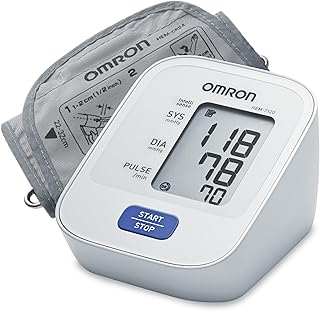
For CKD patients, a home blood pressure monitor is not optional — it is the most important management tool available outside of a nephrologist's clinic. Blood pressure control to below 130/80 mmHg is the single most powerful intervention for slowing eGFR decline, and achieving this requires far more data points than the 2–4 clinic BP readings available during typical Indian antenatal or nephrology follow-up. Clinical research (SPRINT trial, ACCORD-BP) consistently demonstrates that home-measured blood pressure is more predictive of cardiovascular and renal outcomes than clinic measurements — eliminating white coat hypertension (falsely elevated clinic readings) and masked hypertension (normal clinic, high at home). The Omron HEM 7120 is India's most trusted clinical-grade home BP monitor, used in Indian hospital outpatient departments, cardiac rehabilitation programmes, and nephrology follow-up clinics. Features: Oscillometric upper arm measurement (more accurate than wrist monitors for most adults); WHO hypertension indicator (immediate colour-coded result interpretation); Intellisense technology for optimal cuff inflation; 30-reading memory (sufficient for a 2-week log before each nephrology appointment); easy one-touch operation for elderly patients who constitute a large proportion of CKD patients. Recommended protocol for CKD patients: check BP morning (before medication) + evening × 7 days before each nephrology appointment — average these 14 readings to provide the most clinically accurate BP data for medication titration decisions.
CKD patients के लिए home BP monitor optional नहीं। Home BP > clinic BP predictive (white coat effect eliminate)। Omron HEM 7120: India का most trusted clinical-grade monitor। 30-reading memory, Intellisense, WHO indicator। Protocol: morning + evening × 7 days before nephrology appointment → 14 readings average → medication titration। View on Amazon IndiaAffiliate link — small commission at no extra cost.

Between laboratory visits, home urine testing provides a valuable additional monitoring window for CKD patients and those at high risk (diabetics, hypertensives). The Neodocs Kidney Wellness test uses smartphone-analysed urine test strips to assess multiple kidney and metabolic parameters: urine protein/albumin (detecting worsening proteinuria — a sign of accelerating glomerular damage that should prompt a lab uACR retest); urine glucose (glycosuria in a diabetic CKD patient may indicate either poor glycaemic control or a tubular dysfunction from advancing nephropathy — check alongside HbA1c); blood in urine (haematuria) — persistent microscopic haematuria alongside CKD may indicate glomerulonephritis and warrants urgent nephrology review; pH, specific gravity, leukocytes — collectively detect dehydration, UTI, and renal tubular dysfunction. The smartphone integration provides trend-tracking over time — far more clinically useful than isolated dipstick readings. Important limitation: home urine strips detect qualitative protein (present/absent or rough quantitation) but cannot replace the laboratory urine ACR (albumin-to-creatinine ratio) for quantitative CKD staging, nephrology decision-making, or medication titration. A positive home protein test should always be confirmed with a laboratory uACR before clinical action is taken.
Home urine test: lab visits के बीच monitoring। Protein (worsening proteinuria → uACR retest), glucose (glycosuria = poor control या tubular dysfunction — HbA1c check), haematuria (glomerulonephritis → nephrology review), pH/specific gravity/leukocytes (dehydration, UTI)। Smartphone trend-tracking। Important: home strips qualitative — quantitative uACR for CKD staging lab पर ही। Positive home protein → lab uACR से confirm। View on Amazon IndiaAffiliate link — small commission at no extra cost.
Related Tests / संबंधित जांचें
These tests are commonly ordered alongside eGFR in the complete kidney health workup:
eGFR के साथ ये जांचें complete kidney health workup में order होती हैं:Frequently Asked Questions / अक्सर पूछे जाने वाले सवाल
eGFR naturally declines with age — approximately 1 mL/min/1.73m² per year after age 40 — even in healthy kidneys. Age-specific averages for healthy Indians: 20s: ~116; 30s: ~107; 40s: ~99; 50s: ~93; 60s: ~85; 70s: ~75; 80+: ~65 mL/min/1.73m². As a general rule, an eGFR above 90 indicates normal kidney function at any age. An eGFR of 60–89 requires interpretation in context of age and urine albumin — in a 75-year-old with no proteinuria it may represent normal ageing; in a 40-year-old it suggests kidney disease. An eGFR below 60 on two measurements 3 months apart constitutes CKD at any age. The most important principle: interpret eGFR alongside urine albumin (uACR), the eGFR trend over time, and the clinical context — never as a single number in isolation.
उत्तर: eGFR age के साथ naturally decline: 20s ~116 → 80s ~65। >90 = normal। 60–89 = age और uACR के साथ interpret। <60 on 2 measurements 3 months apart = CKD। eGFR + uACR + trend + clinical context — never single number alone।An eGFR of 55 mL/min/1.73m² means your kidneys are filtering at approximately 55% of the young-adult normal rate. Whether this constitutes CKD depends on several factors. First: what is your age? At age 70, an eGFR of 55 may represent normal age-related decline without kidney disease. At age 40, an eGFR of 55 is significantly below expected and strongly suggests kidney disease. Second: what is your urine albumin (uACR)? If uACR is below 30 mg/g (normal) and eGFR is stable — you may have age-related nephrosclerosis rather than progressive CKD. If uACR is above 30 mg/g — you have CKD G3 with significant proteinuria, higher cardiovascular and kidney failure risk, requiring nephrology referral. Third: is the eGFR falling over time? A stable eGFR of 55 over 5 years is far less concerning than an eGFR that has fallen from 80 to 55 over 18 months. Always confirm with a second eGFR 3 months later and a simultaneous uACR before concluding CKD.
उत्तर: eGFR 55 = ~55% filtering capacity। Age dependent: 70 साल में maybe normal ageing; 40 साल में = kidney disease। uACR check करें: <30 + stable = possible normal ageing। >30 = CKD G3 + significant proteinuria → nephrology। Trend: stable over 5 years vs declining 80→55 in 18 months — बहुत different। 3 महीने बाद repeat + uACR।No — NSAIDs (ibuprofen, diclofenac, naproxen, aspirin at anti-inflammatory doses) should be completely avoided if your eGFR is below 60 mL/min/1.73m². In patients with reduced kidney function, NSAIDs inhibit prostaglandin-mediated vasodilation of the afferent renal arteriole — dramatically reducing glomerular perfusion pressure and precipitating acute kidney injury superimposed on existing CKD. This is one of the most common preventable causes of acute-on-chronic kidney injury in India, where ibuprofen and diclofenac are widely self-prescribed without prescription. Even a single dose can cause a significant acute eGFR fall in susceptible patients. The safe alternative for pain management in CKD patients is Paracetamol (acetaminophen) at standard doses (maximum 2g/day in CKD, 1g/day in severe CKD/liver disease) — effective for mild-to-moderate pain without renal prostaglandin inhibition. Always inform your nephrologist, physician, and even dentist of your eGFR before any pain medication is prescribed.
उत्तर: eGFR <60 पर NSAIDs (ibuprofen, diclofenac) completely avoid करें। NSAIDs renal prostaglandins inhibit करते हैं → afferent arteriole constrict → acute kidney injury on CKD। India में self-prescription बहुत common — यह preventable harm है। Paracetamol safe alternative (max 2g/day in CKD)। Nephrologist, physician, dentist — सबको eGFR बताएं।This is the most important and most devastating feature of CKD — it is virtually asymptomatic until eGFR has fallen to approximately 30–40% of normal (CKD stage G3b to G4). The first symptom most commonly noticed is foamy or frothy urine — persistent bubbles that don't clear, indicating protein leakage into the urine. This can occur even in early CKD (G1–G2) and should never be dismissed. Other early symptoms: ankle swelling (particularly by evening), morning facial puffiness, and fatigue (from anaemia of CKD). By CKD stage G4–G5, symptoms include: reduced urine output, nausea, metallic taste in the mouth, poor appetite, severe fatigue, breathlessness, generalised itching (uraemic pruritus), and in very advanced CKD — confusion and drowsiness (uraemic encephalopathy, a medical emergency). The practical message: do not wait for symptoms — if you are diabetic, hypertensive, have a family history of kidney disease, or are above 50 with significant cardiovascular risk, get annual eGFR + uACR screening regardless of how well you feel.
उत्तर: CKD G3b–G4 तक virtually asymptomatic। First symptom: foamy/frothy urine (persistent bubbles = protein leak, G1–G2 में भी)। Early: ankle swelling, morning facial puffiness, fatigue। Advanced (G4–G5): reduced urine, nausea, metallic taste, itching। Very advanced (G5): confusion = uraemic encephalopathy = emergency। Symptoms का wait नहीं — annual eGFR + uACR screening।The answer depends critically on the cause and stage. Fully reversible (acute causes): If low eGFR is caused by dehydration, recent NSAID use, an acute infection, or urinary obstruction — correcting the underlying cause often fully restores eGFR to the pre-event baseline within days to weeks. Partially reversible (early CKD, optimal management): With aggressive BP control (below 130/80 mmHg), tight glycaemic control in diabetics, ACE inhibitor/ARB therapy, SGLT2 inhibitors, dietary salt restriction, weight loss, and NSAID avoidance — CKD progression can be dramatically slowed (by 30–50%) and some studies show modest eGFR improvement in early stages. Not reversible but stabilisable (late CKD): CKD G4–G5 with significant glomerulosclerosis cannot be reversed — the focus shifts to slowing further decline and preparing for renal replacement therapy. The Indian clinical reality: most patients who present at G4–G5 could have been kept at G2–G3 for decades if diabetes and hypertension had been well-controlled from diagnosis.
उत्तर: Cause पर depend करता है। Fully reversible: dehydration, NSAIDs, acute infection, obstruction → correct cause → eGFR restore। Partially reversible/stabilisable: early CKD + aggressive management (BP, HbA1c, ACE/ARB, SGLT2) → progression 30–50% slow। Not reversible: late CKD (G4–G5) with glomerulosclerosis। Indian reality: G4–G5 पर पहुंचे patients G2–G3 पर decades रह सकते थे — early BP और diabetes control से।Serum creatinine is the directly measured value — a blood test that measures the concentration of creatinine (a muscle metabolism waste product) in the bloodstream. Creatinine rises when the kidneys filter less (reduced eGFR). eGFR is not directly measured — it is a calculated estimate derived from serum creatinine using a mathematical formula (CKD-EPI 2021 or MDRD) that also incorporates age and sex. eGFR is more clinically useful than raw creatinine because it accounts for the fact that different people produce different amounts of creatinine based on their muscle mass. For example: a serum creatinine of 1.2 mg/dL in a young muscular 30-year-old male gives an eGFR of approximately 82 (mild reduction — concerning). The same creatinine of 1.2 mg/dL in a frail 75-year-old woman gives an eGFR of approximately 47 (CKD stage G3b — significant kidney disease). The creatinine is the same; the eGFR reveals the true clinical picture. Most Indian NABL labs now automatically calculate and print eGFR alongside serum creatinine — use the eGFR for clinical decisions, not the raw creatinine number.
उत्तर: Serum creatinine = directly measured। eGFR = calculated (creatinine + age + sex)। Example: creatinine 1.2 mg/dL — 30 साल muscular male: eGFR 82 (mild reduction); 75 साल frail female: eGFR 47 (CKD G3b)। Same creatinine, very different clinical picture। eGFR = clinically use करें। Indian NABL labs creatinine के साथ eGFR automatically print करती हैं।- KDIGO (Kidney Disease: Improving Global Outcomes): KDIGO 2024 CKD Evaluation and Management Guidelines
- MedlinePlus (NIH): GFR Test — Patient Information
- Indian Society of Nephrology: ISN — Indian Nephrology Guidelines and CKD India Programme
⚠️ Medical Disclaimer / चिकित्सा अस्वीकरण
This article is for educational purposes only. eGFR results must be interpreted by a qualified nephrologist or physician alongside urine albumin (uACR), serum electrolytes, blood pressure, clinical history, and medication review — never in isolation. A single low eGFR does not diagnose CKD. Never stop or change medications (including ACE inhibitors, ARBs, diuretics, or antidiabetics) based on a single eGFR reading without consulting your nephrologist. Ayurvedic and herbal medicines must be disclosed to your nephrologist — many contain nephrotoxic compounds. If you develop sudden severe symptoms (dramatically reduced urine output, severe breathlessness, confusion, severe vomiting) in the context of known CKD or low eGFR, seek emergency care immediately.
यह लेख केवल शैक्षिक उद्देश्यों के लिए है। eGFR को nephrologist से uACR, electrolytes, BP और history के साथ interpret करवाएं। Single low eGFR = CKD नहीं। Medications nephrologist की guidance के बिना बंद नहीं। Ayurvedic/herbal medicines disclose करें। Sudden reduced urine, breathlessness, confusion, severe vomiting in CKD = EMERGENCY।


Comments
Post a Comment